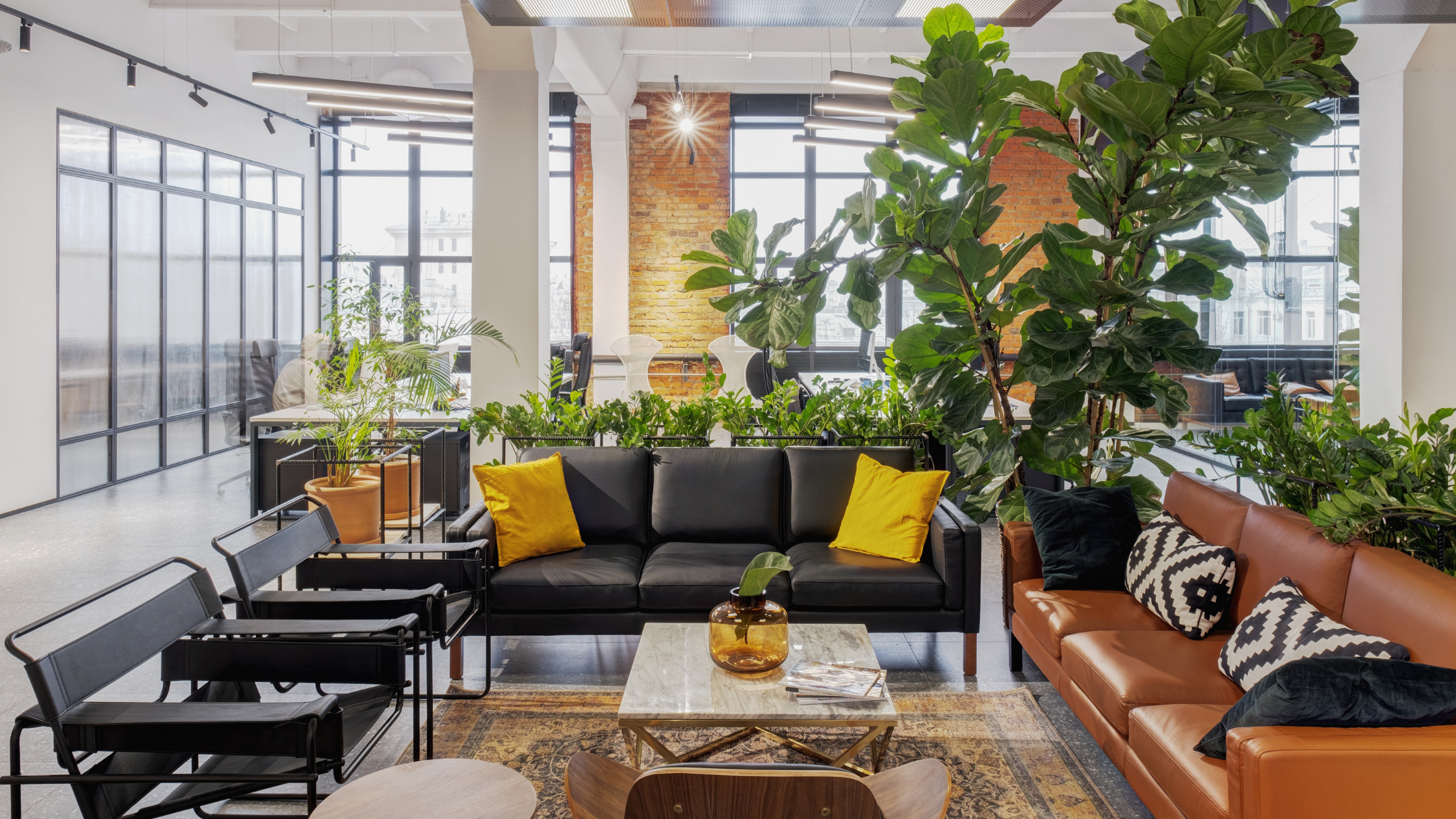
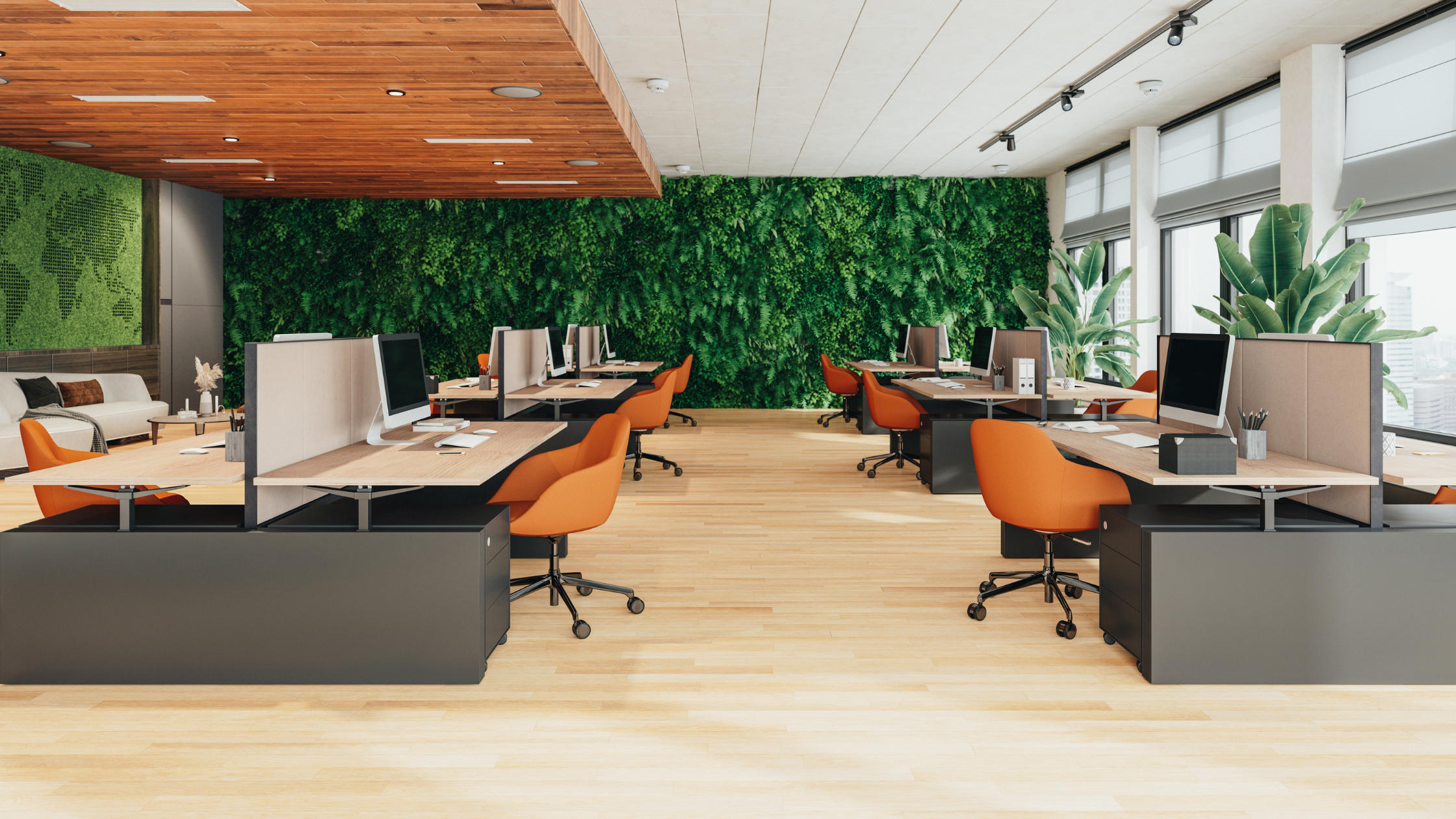
By 2026, sustainable office design is influencing far more than material choices or energy targets. It is shaping how businesses plan, use, and future-proof their workspaces.
Rather than focusing purely on appearance, organisations are looking at how offices perform over time, balancing environmental responsibility with cost, flexibility, and day-to-day usability.
This shift affects everything from office fit-outs and workspace design to long-term maintenance and refurbishment strategies.
At WOWVI Spaces, we see sustainable office design as a practical approach to creating workplaces that continue to work well as businesses evolve.
Sustainable Office Design That’s Built to Last
One of the biggest shifts we’re seeing in office fit-out projects is a focus on how long a space can realistically last.
That means designing layouts that can adapt to growth, hybrid working, or departmental change without needing a full strip-out. Reusing existing building elements where possible, planning flexible partitioning, and choosing systems that can be reconfigured all reduce waste and future disruption.
Well-considered fit-outs don’t just lower environmental impact.
They lower total cost over time.
Materials Chosen for Performance, Not Just Appearance
In 2026, material selection in office interior design is far more deliberate than it was even a few years ago.
Clients are looking for materials that perform well across durability, maintenance, and environmental impact.
That often includes:
Low-VOC paints and finishes to improve indoor air quality
FSC-certified or responsibly sourced timber
Recycled or recyclable flooring and acoustic solutions
Robust materials that won’t need early replacement
The best sustainable choices are the ones that quietly hold up to everyday use while reducing the need for frequent refurbishments.
Energy-Efficient Workspace Design From the Start
Energy efficiency is no longer an afterthought. In modern workspace design, it is built into projects from the earliest design stages.
Layouts are planned to maximise natural light, reducing reliance on artificial lighting. LED solutions, occupancy sensors, and efficient HVAC systems are now standard features in high-quality office fit-outs, rather than optional upgrades.
These choices support sustainable office design goals while also improving comfort levels and reducing ongoing running costs across commercial office interiors.
Workspace Design That Supports How People Actually Work
A workspace that supports people properly is, by default, more sustainable.
Thoughtful workspace design reduces churn, limits constant reconfiguration, and encourages teams to use the office as intended. In practice, this means:
A clear balance between collaborative areas and quieter focus spaces
Good acoustic performance and well-considered lighting
Ergonomic furniture designed for long-term use
Layouts that reflect real hybrid attendance patterns
When people are comfortable and productive, offices remain relevant for longer and the life of the design itself is extended.
Circular Thinking in Office Interior Design
Circular principles are increasingly shaping office interior design and office refurbishment projects.
Rather than asking how quickly a new office can be delivered, businesses are asking how easily it can be adapted, repaired, or refreshed in the future.
Designing with modular systems, reusable components, and furniture take-back schemes helps reduce waste across the full lifecycle of a workspace. This circular approach turns an office fit-out into a longer-term asset, rather than a short-term solution.
Building Offices That Stand the Test of Time
Sustainable office design in 2026 is about making smart, considered decisions that stand up over time, environmentally, financially, and practically.
At WOWVI Spaces, we design office fit-outs and workspace environments that balance sustainability with real-world use. That means creating offices that work efficiently today, adapt easily tomorrow, and avoid unnecessary waste along the way.
If you’re planning an office fit-out or reviewing your current workspace, sustainable design isn’t about doing more, it’s about doing things better, from the start.