Exhibitions aren’t just about turning up with a stand and hoping for the best.
The businesses that get real value from shows treat them as a strategy, not a line item on a marketing plan.
If you’re committing time, budget and people to an exhibition, here are 10 things worth thinking about before your next show, with your exhibition stand playing its part in a much bigger picture.
1. Be clear on why you’re exhibiting
Before you book floor space or design a stand, get specific about the outcome you want from the show.
Is this about:
Brand awareness?
Lead generation?
Product launches?
Partnerships?
Market testing?
The clarity here shapes everything that follows, from your messaging to how your exhibition stand is designed.
2. Choose the right show (not just the biggest one)
Not every exhibition is right for your audience.
Look at:
Who actually attends
What stage buyers are at
Whether the footfall matches your ICP
Who else is exhibiting
Sometimes smaller, more targeted shows outperform the big-name events.
3. Know what success looks like before you arrive
Decide how you’ll measure whether the show was worth it.
That could be:
Number of quality conversations
Booked follow-up meetings
Qualified leads
Brand awareness uplift
Partnerships started
Your exhibition stand should support these goals, not distract from them.
4. Plan how people will experience your space
Your stand is part of the visitor journey, being remembered when people get home is the key to a successful show.
Think about:
How people are invited in
Where conversations happen
Where content lives
Where people naturally pause
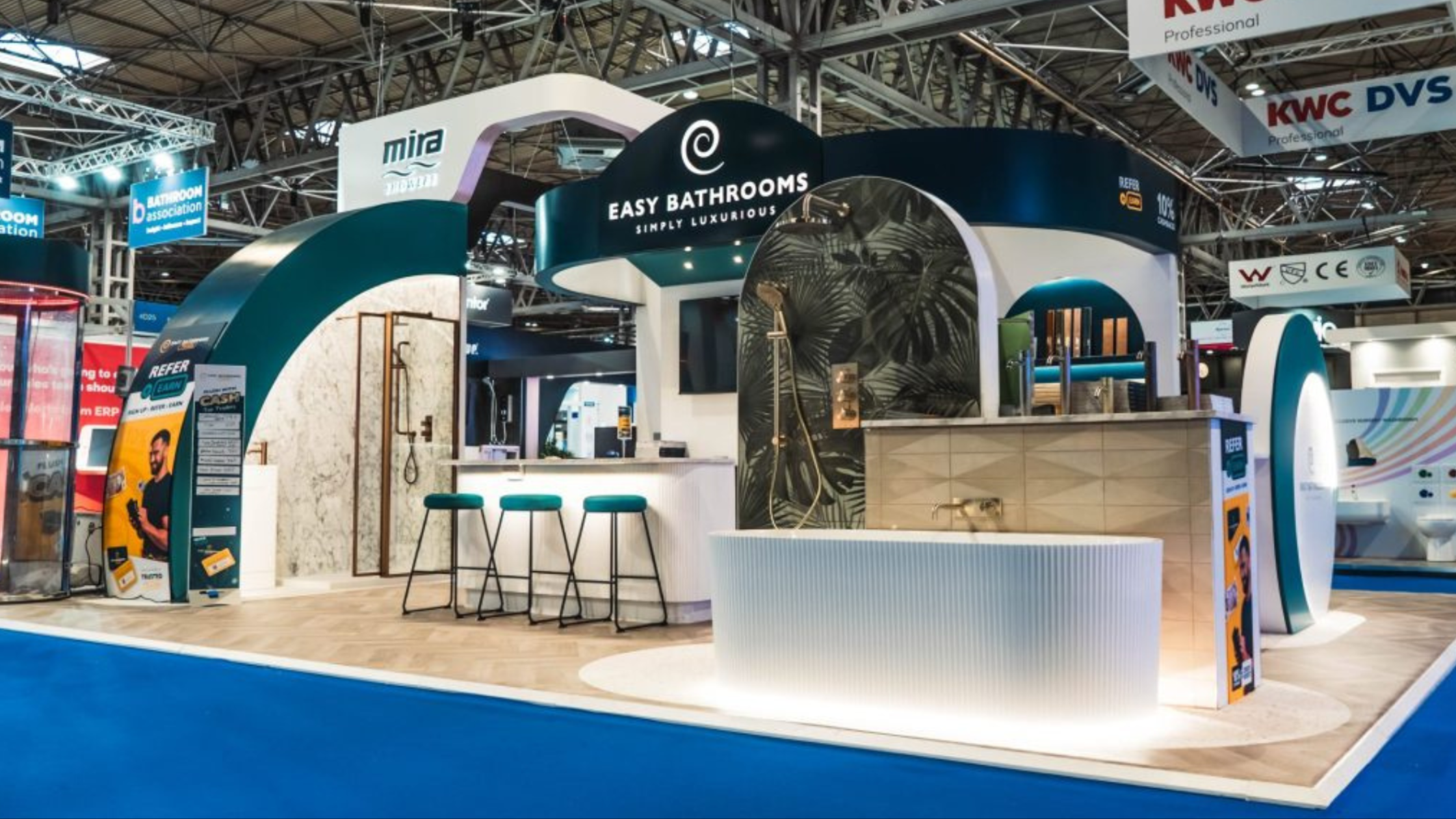
Good exhibition stand design supports flow, not friction.
5. Make it obvious who you are and what you do
Exhibition halls are busy.
People won’t work hard to understand your brand.
Your stand and wider presence should clearly answer:
Who are you?
What problem do you solve?
Who are you for?
6. Think beyond the stand: what’s the hook?
Stands that perform well usually offer something to engage with:
A simple demo
A conversation starter
A useful takeaway
Content people actually want to interact with
The stand is the setting. The experience is what people remember.
7. Design for the people working the show
Your team will spend long days on the stand.
Think about:
Where they stand
How easy it is to start conversations
How comfortable the space feels
Good exhibition stand design supports the people using it, not just the people viewing it.
8. Plan how the show fits into your wider marketing strategy
Your exhibition presence shouldn’t feel like a one-off moment that disappears when the show ends.
The strongest show strategies connect your exhibition stand to:
Your website and campaigns
Your sales conversations
Your wider brand environments
This is also where modular exhibition stand design comes into its own.
9. Think long-term, not one show at a time
If you’re exhibiting more than once a year, design for reuse.
Modular exhibition stands:
Adapt to different footprints
Reduce long-term cost
Cut waste
Create consistency across shows
This turns your stand into a long-term asset, not a one-off expense.
10. Decide what happens after the show (before it starts)
The real value of exhibitions often comes after the doors close.
Plan:
How leads are captured
Who follows up
What content supports follow-up
How success is reviewed
Your exhibition stand starts conversations.
Your follow-up strategy turns them into outcomes.
Don’t forget video and print, your stand doesn’t work alone
our exhibition stand is only one part of how people experience your brand at a show.
The stands that perform best are supported by the content and materials that live on (and beyond) the space itself.
Video at exhibitions: Video helps you communicate quickly in noisy, distracting environments.
Whether it’s a looping brand film, a short explainer video, or a case study playing on-screen, video gives people a reason to pause and a faster way to understand what you do.
It also extends the value of the show beyond the day itself, the same footage can be used for:
Social content
Website updates
Sales follow-up
Post-event campaigns
Print for exhibitions: Print still plays a huge role at shows, when it’s done with purpose.
Well-designed print gives people something tangible to take away:
Product sheets
Sample packs
Simple guides
The key is relevance. Useful, well-designed print supports follow-up and helps your brand stay present after the show floor clears.
When your exhibition stand, video content and print materials are designed together, the experience feels intentional.
Not louder. Not busier. Just clearer.
That approach is often the difference between a stand that gets noticed and one that actually gets remembered.
How WOWVI Spaces can support your next show
We design exhibition stands, modular systems, retail kiosks and commercial interiors that help brands show up with clarity, not clutter.
If you’re planning your next exhibition and want your stand to work harder within a bigger strategy, that’s exactly what we build for.
FAQs Exhibiting & Exhibition Stands
Q: Is exhibiting still worth it for B2B businesses in 2026?
A: Yes, when it’s approached with clear intent.
Exhibitions work best when they’re part of a wider brand and sales strategy, not a one-off tactic.
Choosing the right show, designing your space around real conversations, and planning follow-up before the event makes a big difference.
Your exhibition stand should support this, not distract from it.
Q: How do I measure ROI from an exhibition or trade show?
A: ROI isn’t just about how many leads you collect.
As mentioned previously, it’s about the quality of conversations, follow-up meetings booked, and pipeline created.
Make sure you plan how you’ll capture leads and follow up before the show starts. The stand helps start conversations, but the process afterwards turns them into results.
Q: What makes a good exhibition stand design?
A: A good exhibition stand design is clear, usable and aligned to your goals.
Meaning, people should quickly understand who you are and what you do.
It should also support natural conversations and feel practical for your team to use on the day.
Q: What’s the difference between modular and custom exhibition stands?
Custom exhibition stands are usually designed for one show and one footprint.
Modular exhibition stands use flexible components that can be reused and reconfigured.
This gives you more flexibility across different events and better long-term value.
Q: Can exhibition stands be reused across multiple shows?
A: Yes, and it’s often the smarter approach.
Stands designed for reuse can be adapted for different spaces and updated with new graphics.
This reduces waste, lowers long-term cost, and helps keep your brand consistent across shows.
Q: How do I plan for my first exhibition?
A: Ideally 8–12 weeks ahead for stand design, build and logistics.
Q: How do I attract people to my stand at an exhibition?
A: Attracting the right people starts with clarity, not gimmicks.
Your stand should clearly show who you are and what you do from a distance.
Thereofore, an open layout and easy entry points also make it easier for people to step in and start a conversation.
Q: What type of video works best on an exhibition stand?
A: Short, simple video works best in busy exhibition halls.
Looping brand films or short explainers help people quickly understand what you do.
Video should support conversations, not try to replace them. Check out our sister brand WOWVI Video if you’re on the hunt for engaging video content.